

Niro
Members
-
Joined
-
Last visited
Everything posted by Niro
-
-
I appreciate all of your enlightening information! feetupfun- other than my bike feels faster to my skill level, I really like his behavior in 1st gear. I can pull the bike pretty strong and smooth from almost standing without using the clutch. I also didn't find myself yet need to switch to 2nd gear while in section. Knowing the bike pull strong and that the 1st. gear is very usable gives me confident in sections. carl and lineaway- I took trials riding lessons with highly professional and very well known rider and he told me the same, about gates being very tight this days. In my practices at his sections I never used the clutch. But I didn't ride in an event yet. My first event is coming this Sunday. After that I will probably have more knowledge on how sections are set and how I mange to rode my bike. Bottom line I think to move 1 teeth smaller in the front sprocket will be a good lesson for me and if I don't like it, I can always go back one teeth up.
-
Thanks! Now I understand this. So a followup question- what are the disadvantages (if any) in going down 1 teeth in the front sprocket?
-
So if understand correctly- in order to slower my bike further more, I can change to 9 teeth front sprocket (I prefer to stay with the rear 48T), correct?
-
I'm looking for the slowest gearing while bike in 1st gear and rolling.
-
Ok. So according to that, is the next assumption true or false: Bike is on 1st gear and rolling (clutch not pressed, throttle not open) - the bike with the higher gearing (11/46) will roll SLOWER then the bike with the lower gearing (10/48)
-
I'm riding 1970 Montesa Cota 247. I'm beginner and stating to compete in vintage trails events, meaning riding in woods. My bike has 10/48 sprockets set. The Cota manual indicate that the factory bike has 11/46 set. The difference is about 12%. But what does it mean? My main goal is to ride as slowly as I can in 1st gear and maintain smooth acceleration when needed. Does the 11/46 ratio is slower then 10/48? Should I changed back to the factory setting?
-
Clutch oil just replaced. I don't have the bike that long so I can't tell if there is a leak oil. I will refill and check.
-
Can you please point me to the second gearbox compartment? I looked again in the manual and couldn't spot any, Unless you meant the clutch box oil. I will try the poking method to see if something is clogged inside. Thanks.
-
Ok folks, thanks! I will fill the gearbox and check as suggested. Cheers.
-
It cross my mind. But is it possible for the gear to work without oil? I took the bike for 2 rides and I was able to change the gears with no issue. One thing I notice- I couldn't put the gear back in Neutral while the bike is idle and stoped.
-
Hello, I'm trying for the first time to change the gearbox oil in my 1970 Cota 247. I opened the fill plug and remove the drain plug, but only a few drops of oil came out. I tilted the bike but no oil came out. Am I missing something? is there a breather for the gearbox oil? engine number 21M2067 Thanks.
-
I think this is the case in my early Cota modal. Since I'm still newbie to the bike, I think I will save this kind of project for the future. Thanks.
-
Can I fit it to the early model of the Cota 247? Main is 21M2067, I believe it has only 1 hole for the spark plug.
-
I read at an old post about adding compression release to Cota 247. Here: Can someone please share more information about this mod? How and where you add this, benefits, photos. Any information will be appreciated. Thanks.
-
Woody, Thank you so much for the information provided! I sure learned a lot from it 😎
-
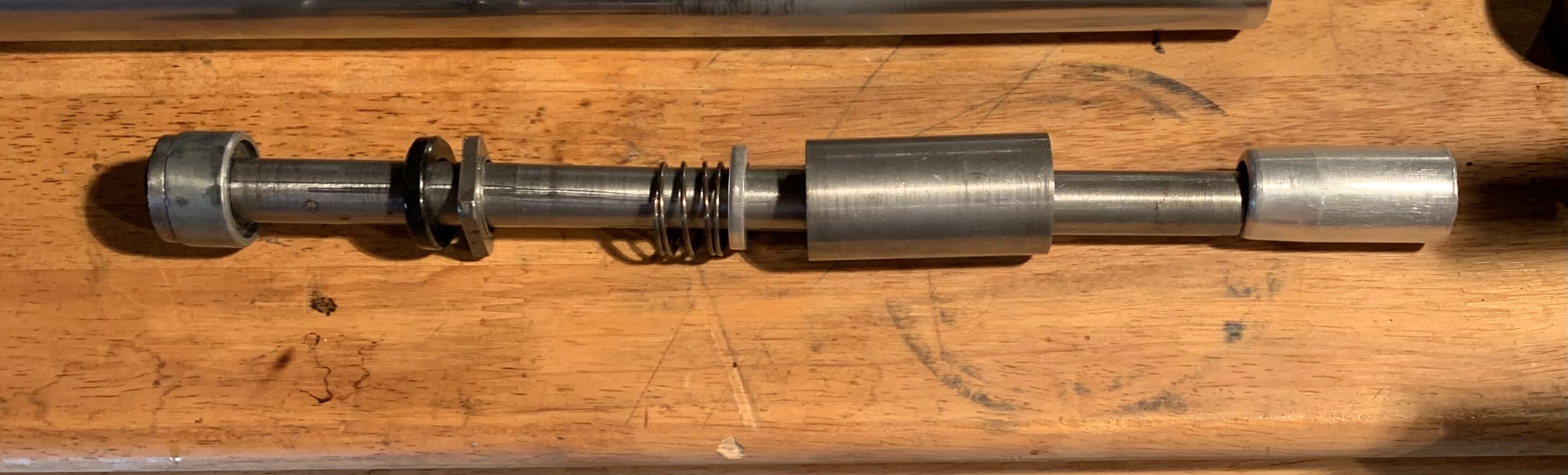
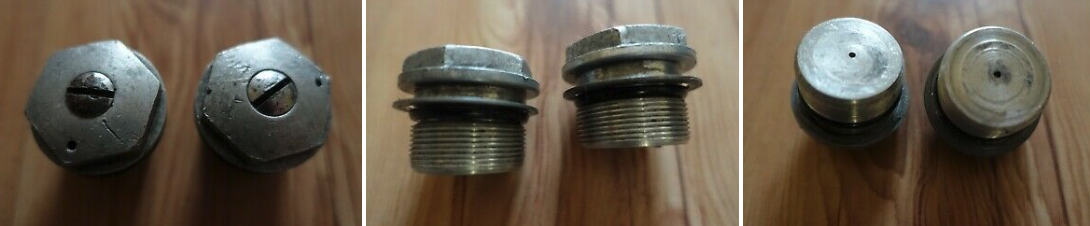
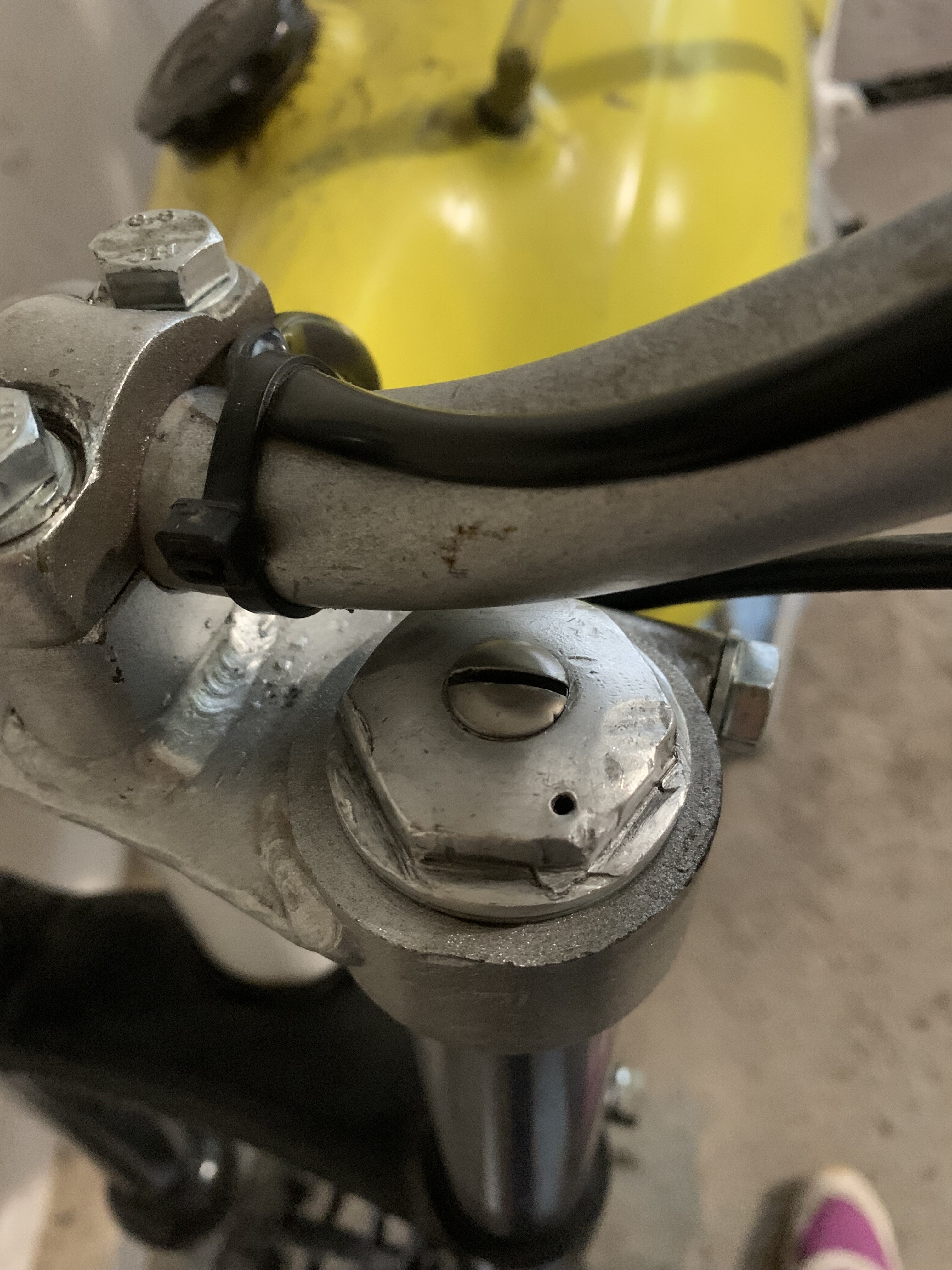
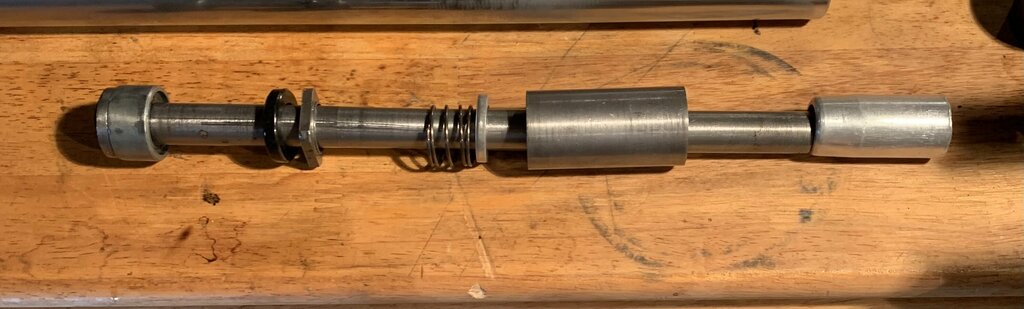
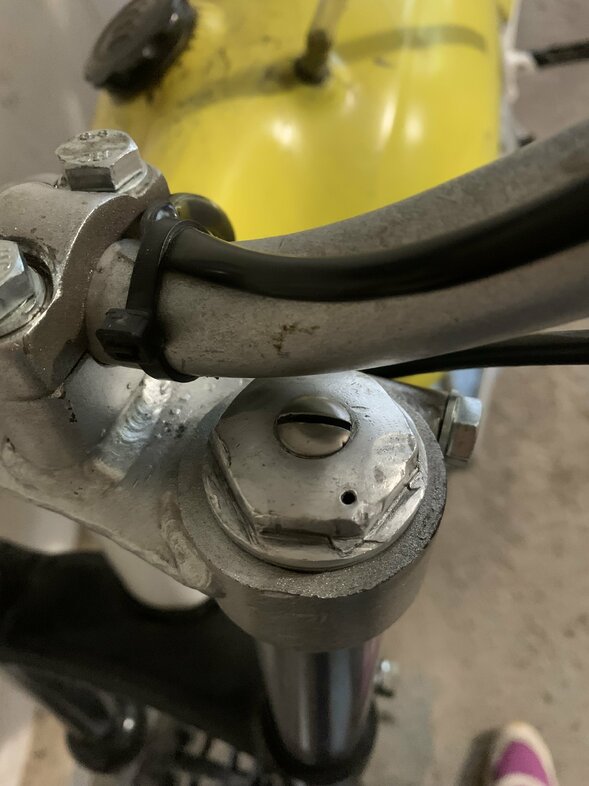
Feetupfun- Thank you for your helpful answer! I would appreciate if you can help me with the related questions: 1. I will try to rephrase my question: how I can I tell if the forks compress correctly and not, let say, sagging down? 2. This is a photo of the fork damper assembly- can you tell if this damper has the anti-topping spring that prevent the metal to metal impact? 3. This is the fork caps that the bike has. Can you tell if this is the vented type caps that releasing air? Thank you.

-
Hello, I redid the forks on 1970 Cota 247. I only had the bike for a short time and don't know how the forks should fill/ behave. Currently I reassemble the forks and put 190cc fork oil (15W) in each. what I noticed is: 1. The forks compress (goes down) quite easily the first few mm, feel like they bottoming, but I never experienced this behavior before so I don't know if this is the case, or it's a normal behavior. 2. It seems the fork doesn't bounce all the way up. They do bounce up but I can pull them up few mm more. 3. When I compress the forks, I can hear air goes out from the top of the left fork (I believe it's from the cap). I don't hear any air hissing from the right fork. (I open and clean each cap). Should I hear air goes out or not? Can you please help me to address those issues? Thanks
-
Alright. Once again thank you for your help 🙂
-
I learned something new! cheers. 2 more questions please: 1. what kind of fork oil you use? 2. generally speaking- can you mount forks from newer models of Cota 247 on early Cota 247?
-
Thank you very much! So for my knowledge- What is the purpose of the spring? against what he compress?
-
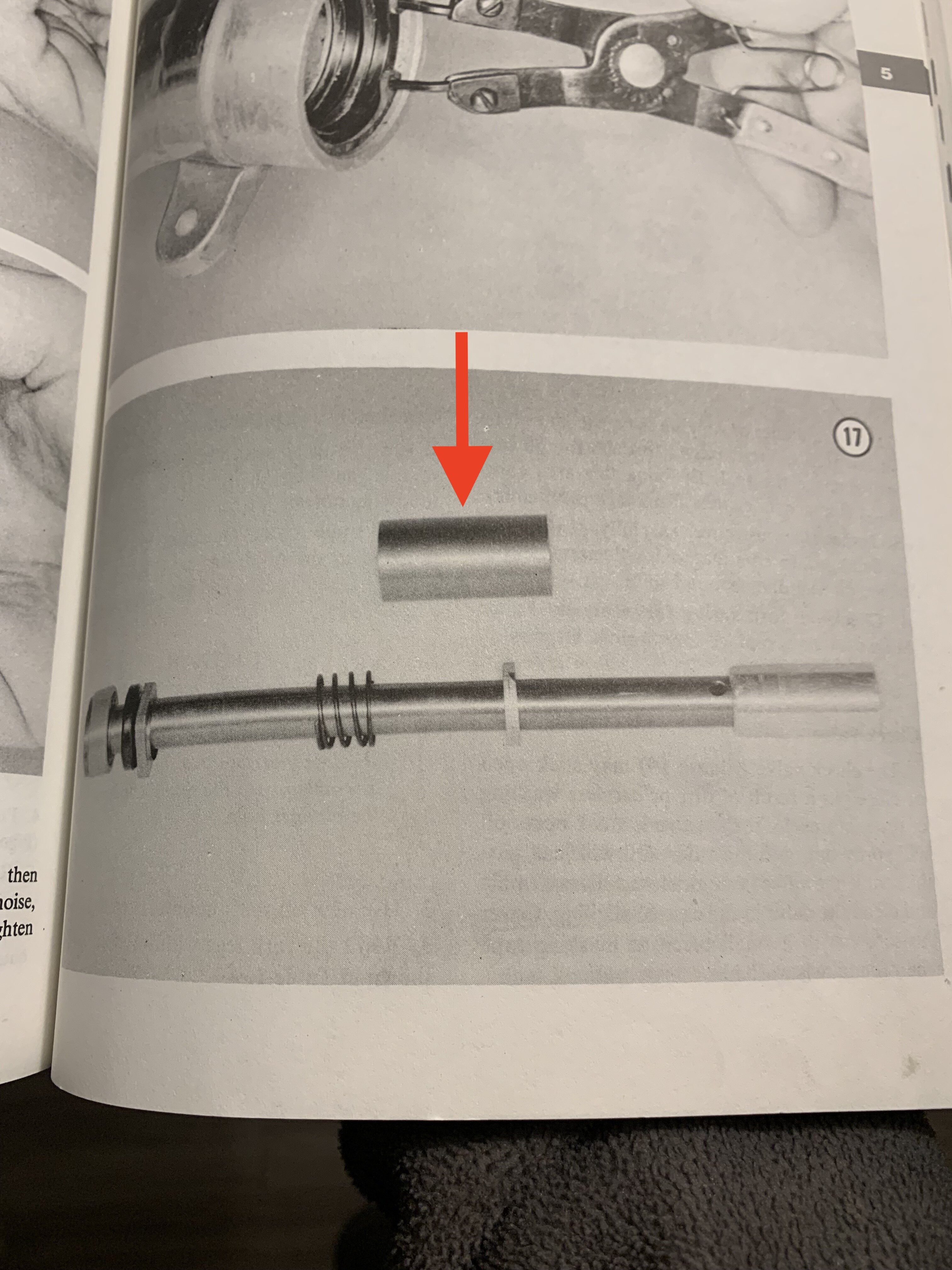
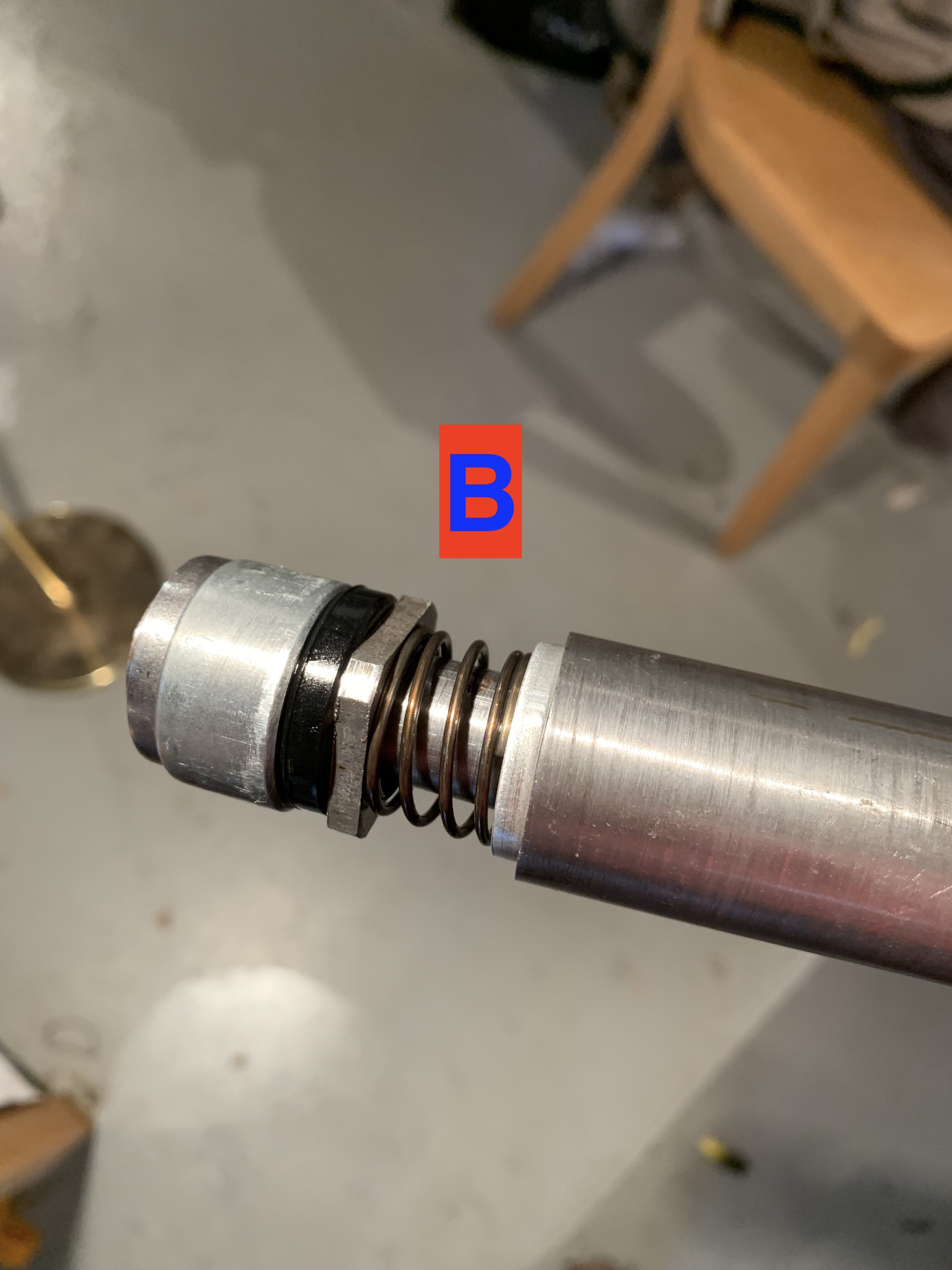
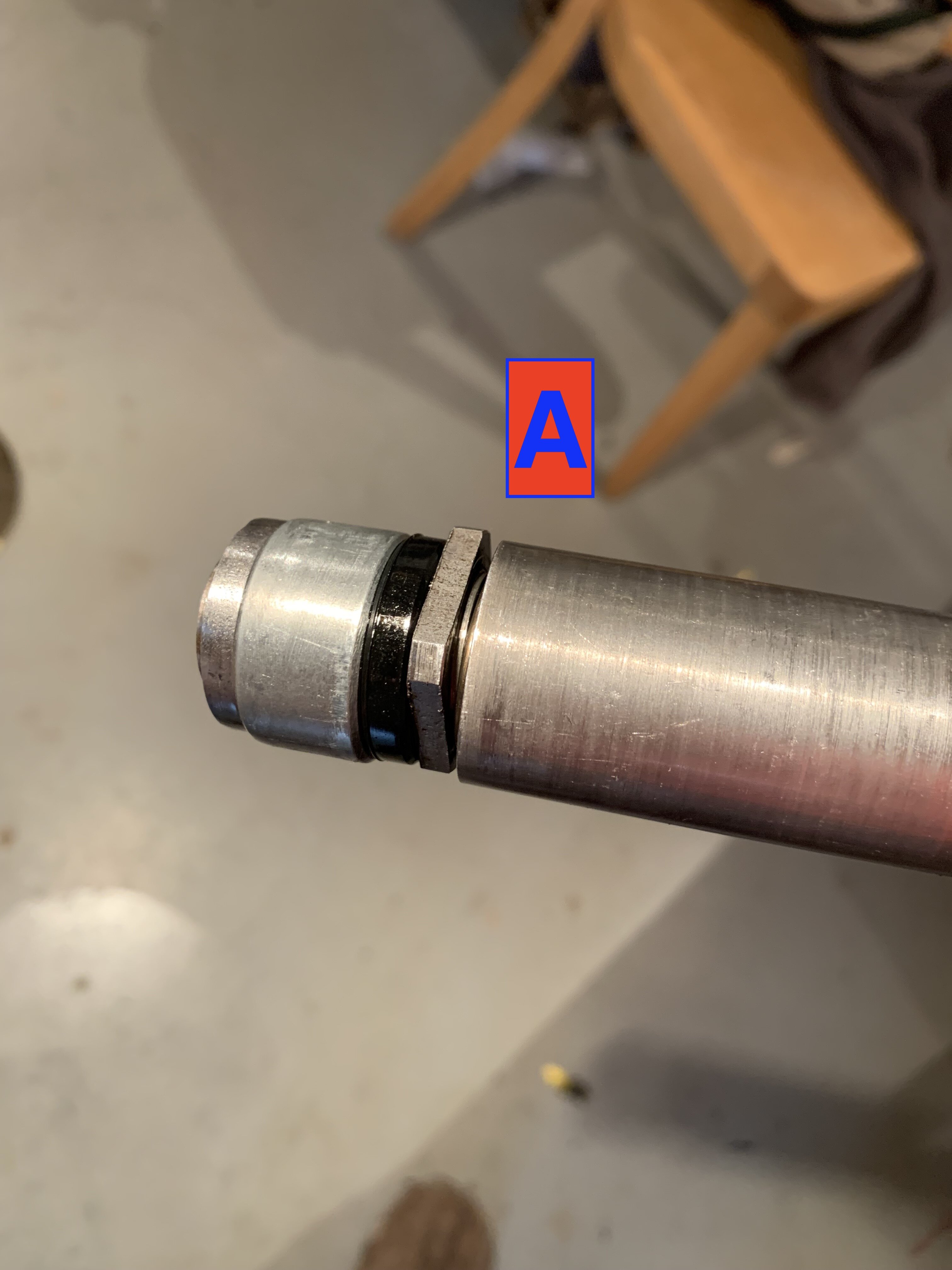
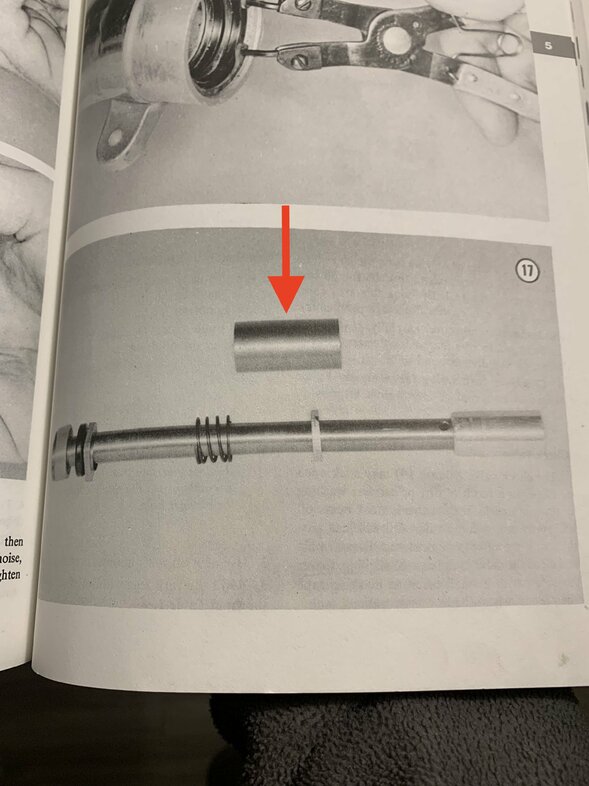
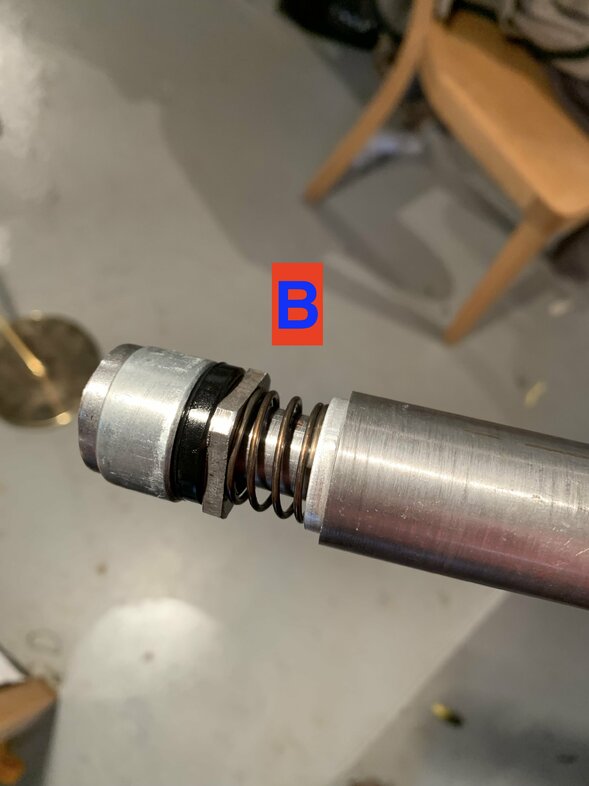
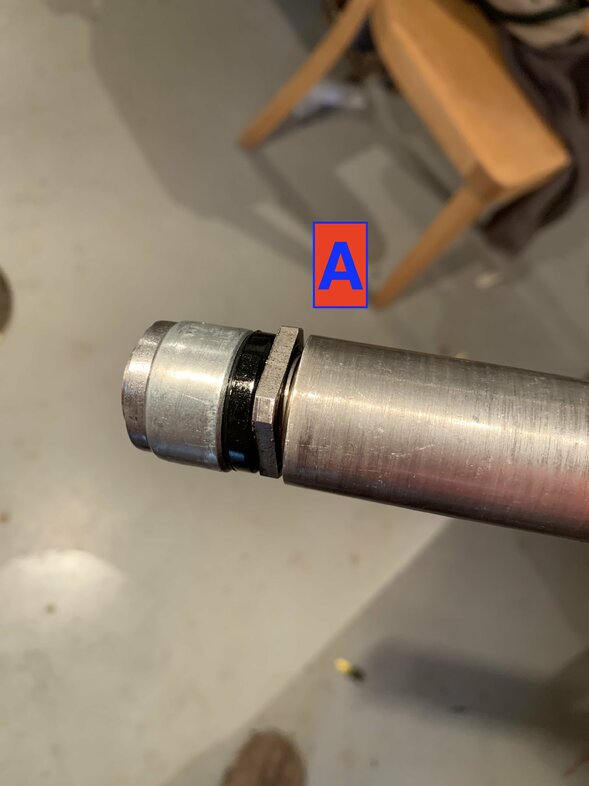
feetupfun- thank you for your answer. I will try to explain myself with photos as regard to my other question. I'm asking about the part in the black and white photo that I marked with red arrow. I think it called internal spacer. I can't figure out in which side to put it back. It has some grove inside in one side. In photo A the internal spacer cover the small spring, and therefor the spring can't compress. In photo B the internal spacer touches the ring before the spring, and the spring can be compress. Which is the correct way the internal spacer needs to be mount? Thanks
-
Hi all, I'm try to install back the fork of 1970 Cota 247 with no result. I can't figure out how to push back the plunger assembly to the inner rod. It seems the parts in the plunger don't fit back inside the rod tube smoothly. I also can't figure out what side of the internal spacer suppose to go on the plunger- the side that sits on the plunger small spring and allow the spring to move, or the other side that cover the spring. from where should I push the plunger back inside the rod- from the bottom part of the rod or the upper part (where the caps thread) Also- is it right to assume that after I put everything back- the plunger should go up and down smoothly in the rod? Any help will be appreciated. Thank you.
-
Sounds logical. I will take the wheel out. Thanks
-
Hi, Can you true the rear wheel while it mount to the bike with the tire on it?